拉贝故居的故事 | The story of John Rabe’s house

无论您远走何方,请点击蓝字,想念我们
入住小粉桥1号
Moving into No.1 Xiaofenqiao
1932年夏天,拉贝同金陵大学农学院院长谢家声签订了一份协议。根据这份协议,同时按照拉贝的要求,学校建一座集办公和居住于一体的房屋出租给拉贝。房屋位于南京广州路小粉桥1号,是一幢西式花园别墅。
In the summer of 1932, Rabe signed an agreement with Xie Jiasheng, Dean of the Agronomy School of the University of Nanking. The agreement specified that the university would build and rent Rabe a house, according to his requirements that it could be used both as his home and office. The house was in western style, attached with a garden, and was situated at No. 1, Xiaofenqiao, Guangzhou Rd.
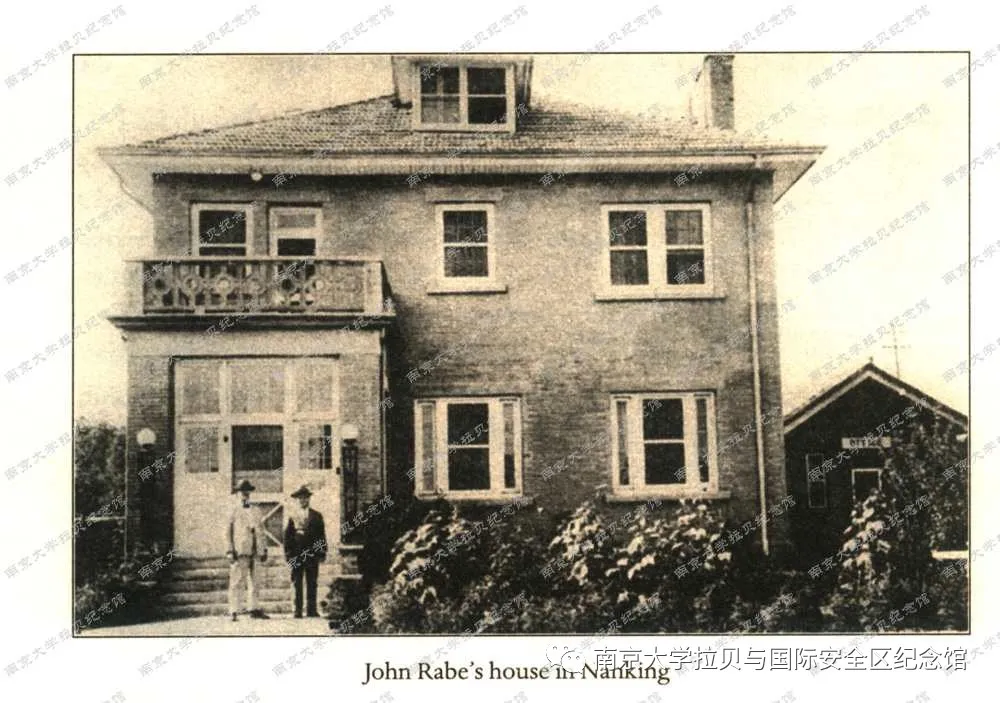
拉贝故居John Rabe’s house in Nanjing
这里既是他的住宅,也是他的办公地。小粉桥大铁门旁挂上了西门子南京分公司的招牌,他在这里生活得十分满意,深深爱上了这座城市。
Here was his home as well as his office, with the signboard of Siemens China Co. on the gate. Rabe was very much contented with the life here and he loved this city very much.
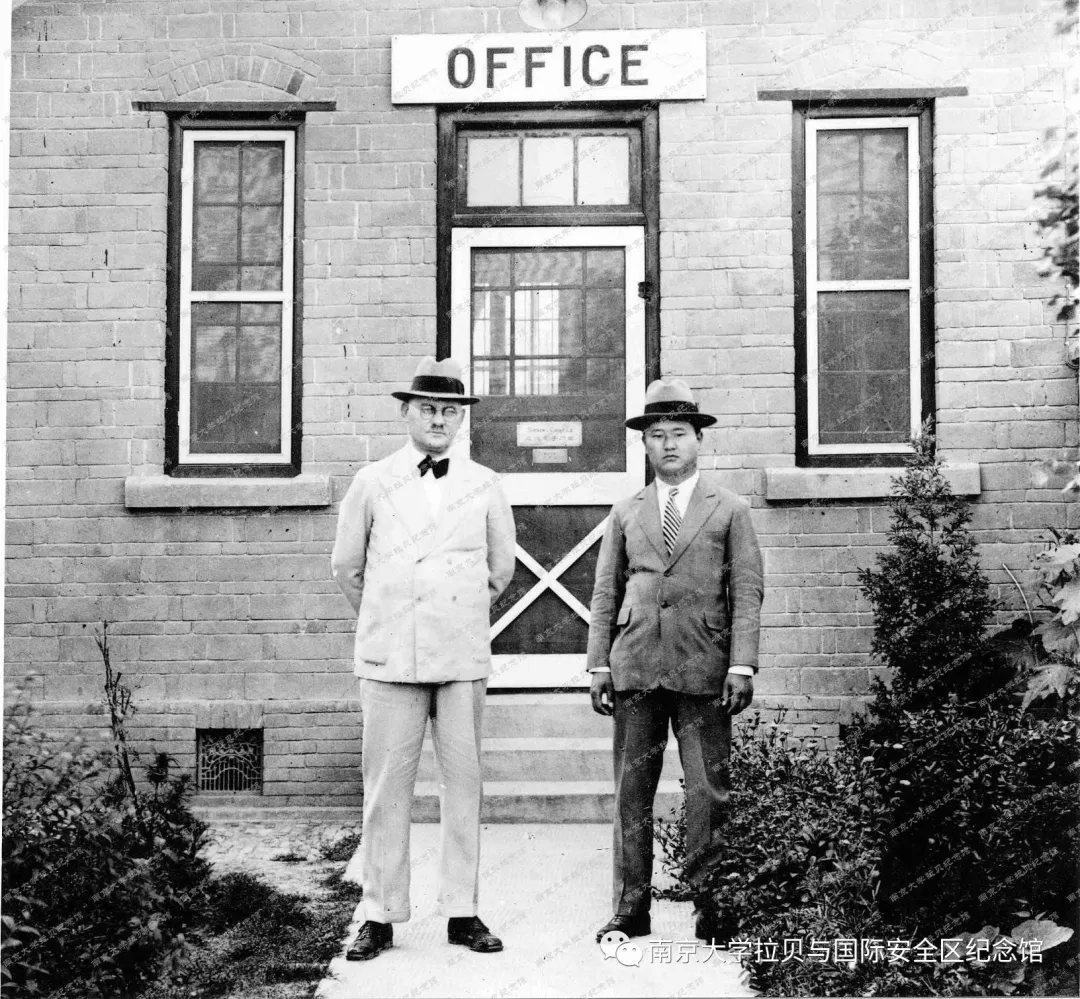
小粉桥1号西门子南京办事处
The Nanjing Office of Siemens at No.1 Xiaofenqiao
他们的女儿常常带上可爱的外孙女乌苏拉来南京看望外公外婆。小乌苏拉的到来常常逗得外公开怀大笑,使小粉桥1号充满了欢声笑语。
Rabe’s daughter often brought her lovely daughter, Ursula, to visit grandparents in Nanjing. Little Ursula always delighted John Rabe, and the house would be filled with laughter.
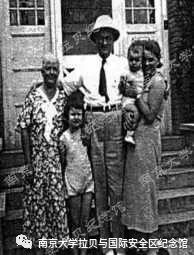
拉贝与他的家人在小粉桥1号主楼前合影
The Rabe family in front of their house at No.1 Xiaofenqiao

1934年10月25日拉贝夫妇在南京拍的银婚纪念照
The studio picture of John Rabe and his wife on their silver anniversary on October, 1934 in Nanjing
创办德语学校
The Founding of German School
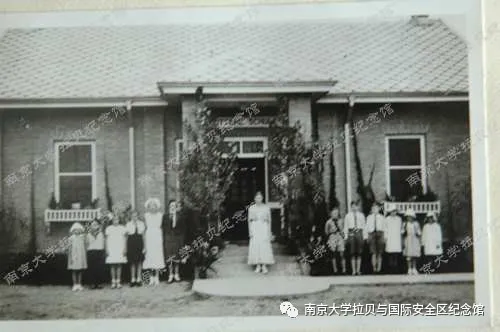
1934年,拉贝为了解决西门子南京分公司的德国职员孩子上学问题,创办了一所德语学校。校舍就设在拉贝小桃园花园的一排平房内。学校共有20多个德国孩子,拉贝是学校董事长,教师都采用聘任制,经费由德国政府拨款。
In 1934, John Rabe established a German school in Nanjing for the children of the German employees of the Nanjing office of Siemens China Co. The school was located in the garden of his house inside a row of one-storey houses at Xiao Taoyuan with about 20 German children. John Rabe served as the chairman of the school board of trustees. The school adopted appointive employment system to recruit teachers, and the fund was provided by the German government.
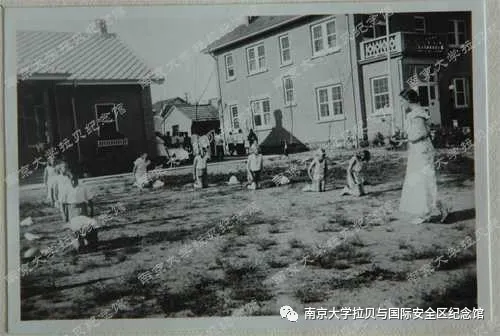
位于主楼左侧的小平房为当年的德语学校
The German school (the one-storey house on the left of the main building)
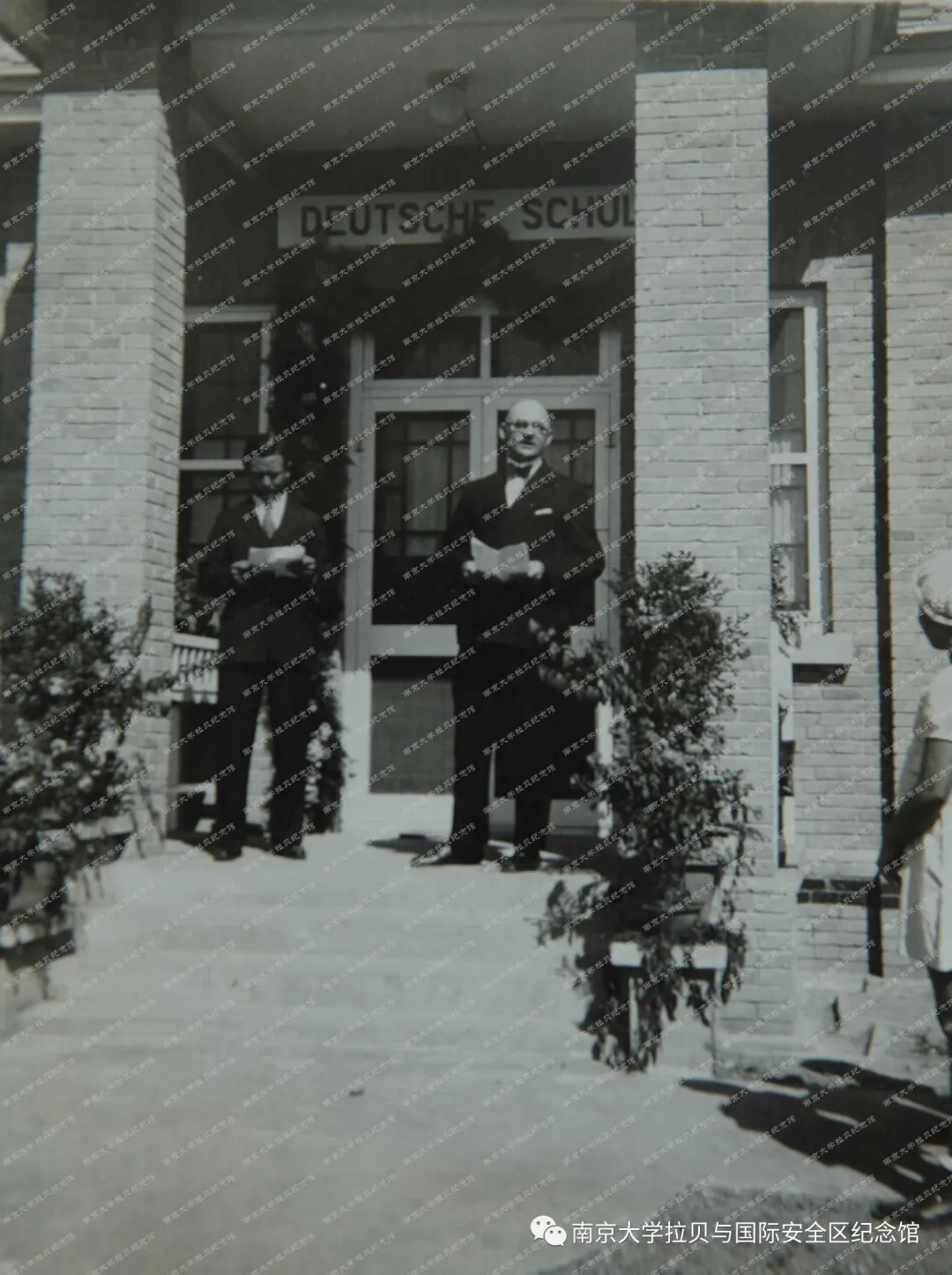
约翰.拉贝 在为德语学校的师生讲话
John Rabe delivering a speech as the principal of the German school
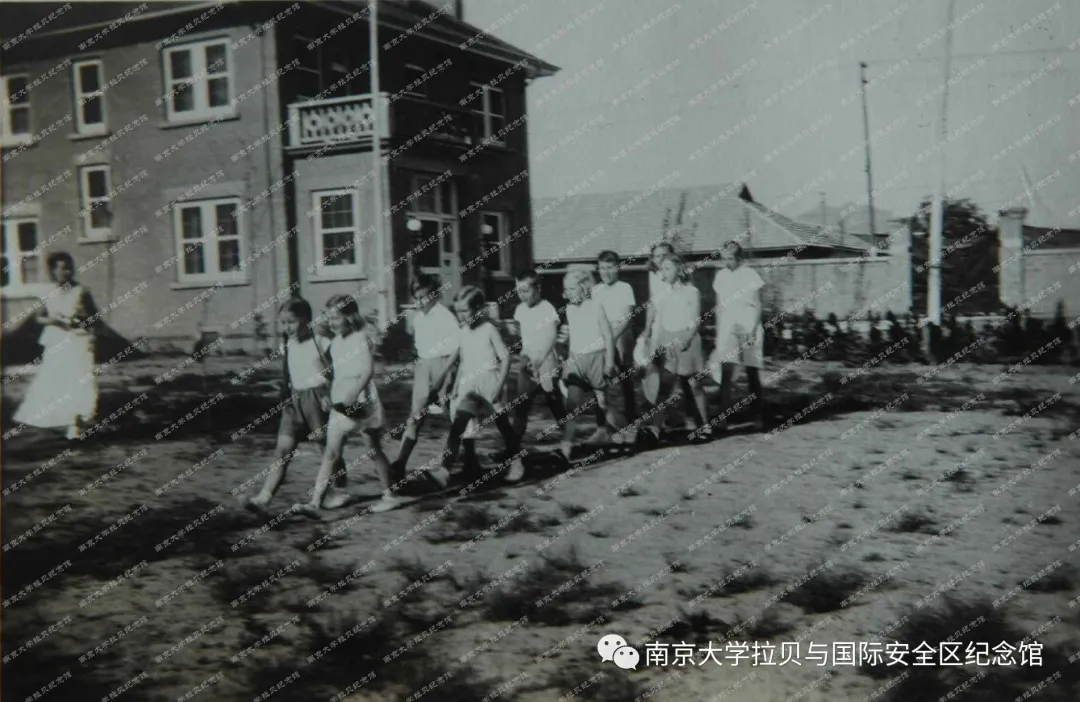
德语学校的师生在院内活动
Outdoor activities of students and teachers in the yard of the German school
西门子难民收容所
The Refuge at Siemens China Co.
1937年8月,日本飞机开始对南京狂轰烂炸,拉贝从避暑的北戴河赶回南京,亲自设计了位于他庭院内的救济难民的防空洞,随后带领大家对8月份初建的防空洞进行改造加固。
In August, 1937, the Japanese airplanes began to bomb Nanjing. Hearing the news, John Rabe hurried home from his summer vacation at Bei Daihe, a seaside resort place in Hebei province. He himself designed an air-raid shelter in his yard, and then led people to reinforce and improve it after it was completed in the same month.
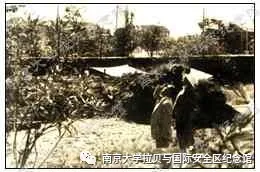
拉贝和韩湘林在眺望空袭的飞机
John Rabe with Han Xianglin looking at the Japanese airplanes in an air raid
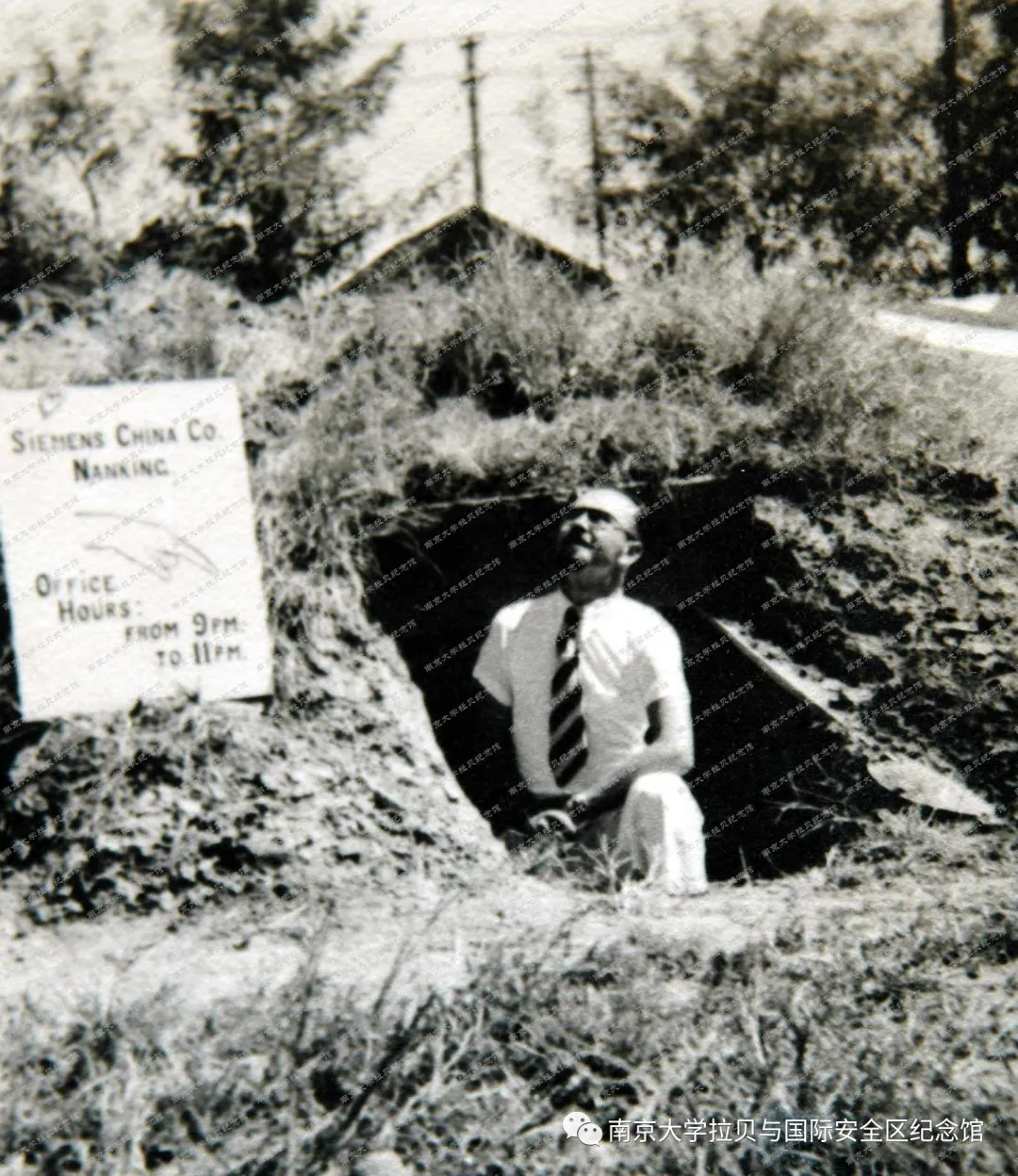
 约翰.拉贝在防空洞口
John Rabe at the entrance of the air-raid shelter
在院子防空洞旁边,还撑起了一块长6米、宽3米的帆布,在帆布上画了有卐字标记的德国国社党党旗,以警告日本轰炸机:不许侵犯,这是德国人的住地。
He also drew a flag of National Sozialistische Deutsche Arbeiterpartei (NSDAP) on a piece of canvas (6m x 3m) bearing a big swasktika, so as to warn the Japanese bombers: No invasion of this area where the Germans lived.
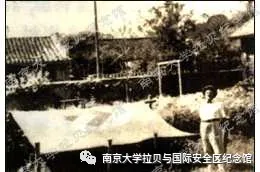
拉贝在帆布上画的德国社会党党旗
The NSDAP flag on a piece of canvas drawn by Rabe
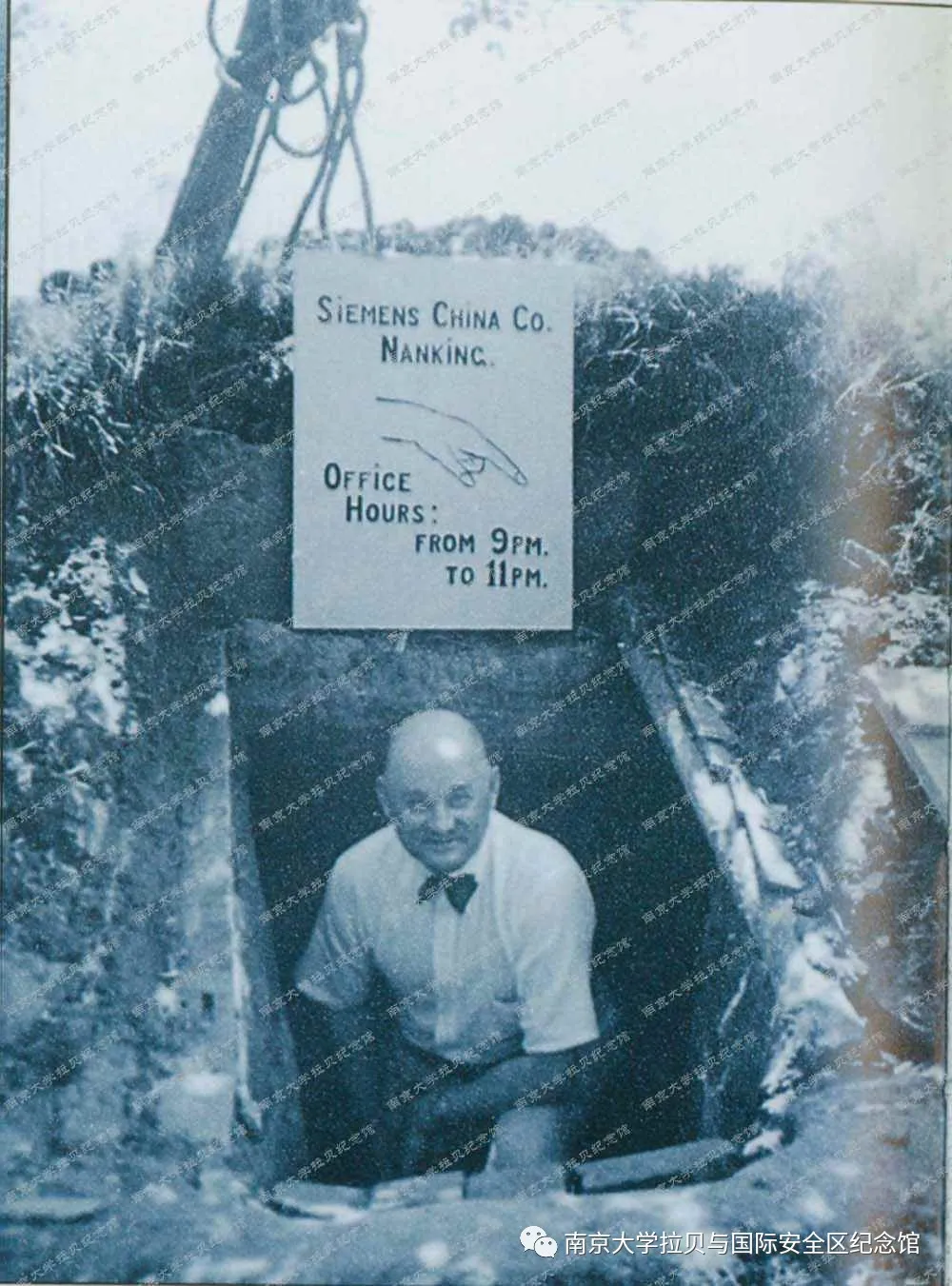
拉贝在防空洞入口处
Rabe at the entrance of the air-raid shelter
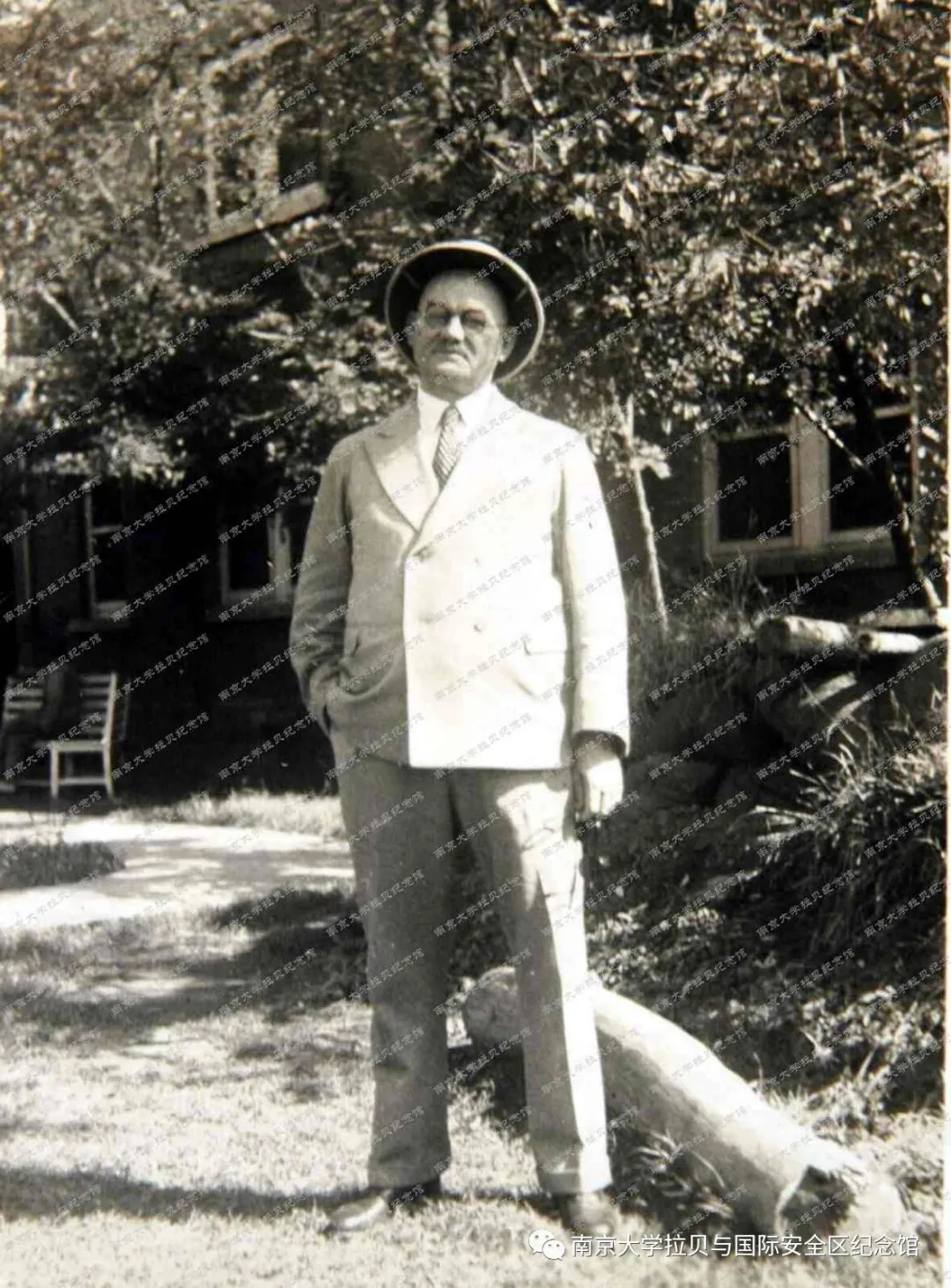
1937年10月拉贝在防空洞前拍的照片
Rabe in front of his air-raid shelter, October 1937
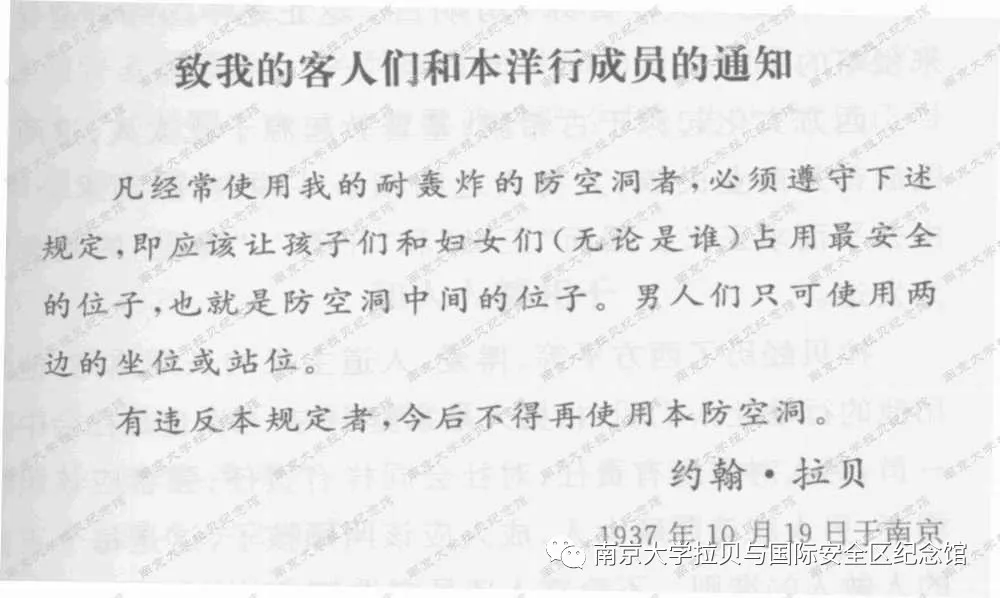
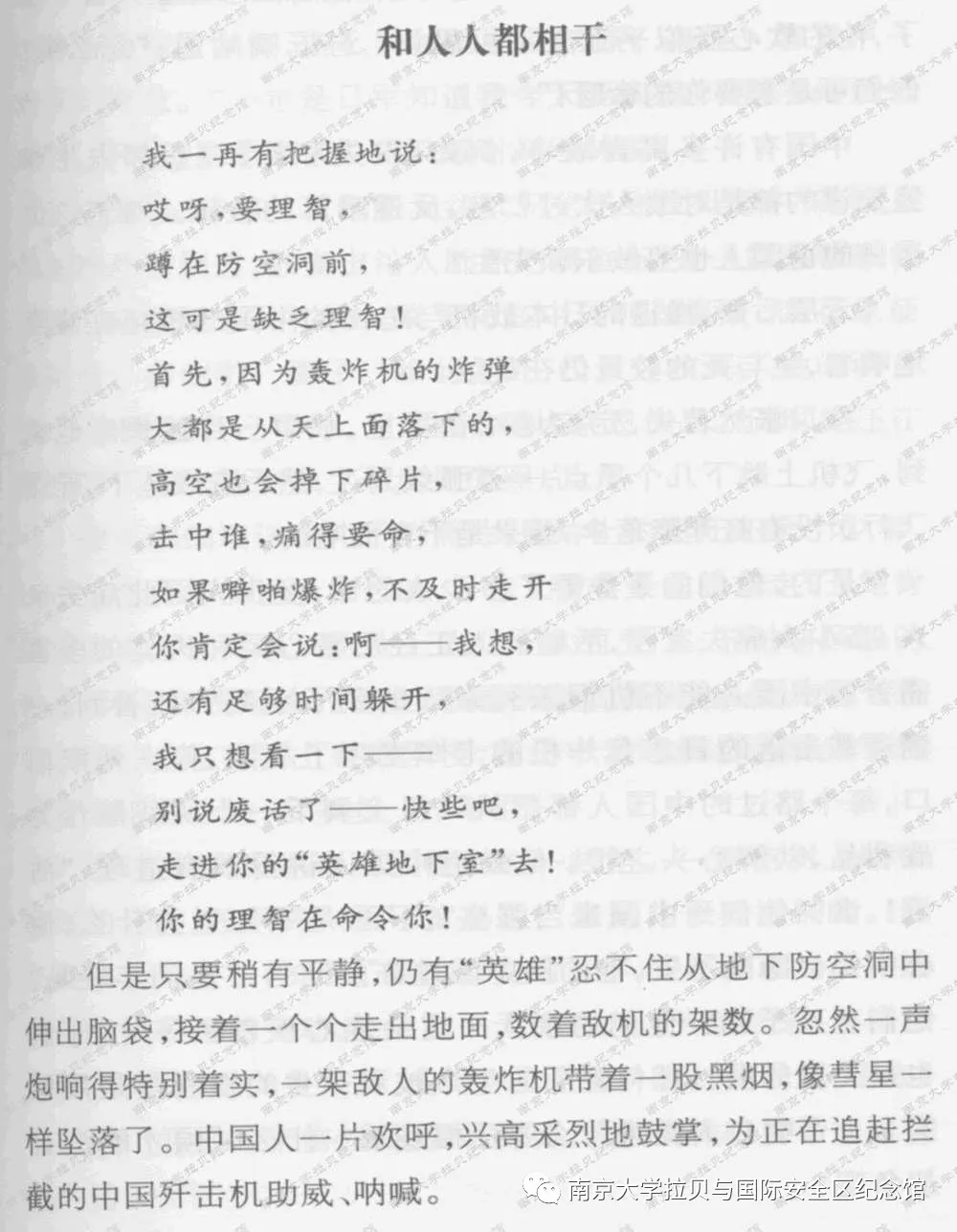
妇孺优先是拉贝规定的使用防空洞的原则,他还写了一首“和人人都相干”的诗告诫大家。
John Rabe stipulated a rule that children and women had the priority to use the air-raid shelter. He also wrote a poem It Concerns Everybody to give advice to people.
英文版:
To My Guests and Employees of Siemens
Those who often use this raid-proof shelter of mine must comply by the following rules:
The safest seats are for children and women, that is, the middle of the shelter Men should sit or stand at two sides.
Whoever violates these rules is not allowed to use this air-raid shelter anymore.
John Rabe
October 19. 1937, Nanjing
He also wrote a verse:
英文版:
To whom it may concern
Now’s the time and now’s the season:
Damn it man, do use your reason!
Crouching at your dugout door
Is witless foolishness and more!
First: because the bombs that drop
Are known to travel from up top,
And that shrapnel from on high
Is said to hurt the stander-by.
Once it booms and it’s too late,
You tell yourself: Oh heck, I’ll wait,
There’s surely time enough to duck,
I only wanted one last look….
Stuff and nonsense. Curly, think
A little faster, hero! Slink
Into your shelter there!
Reason calls you to beware!
1937年12月13日,南京城沦陷了。大批中国人涌向安全区,安全区内设了25个难民收容所。拉贝的住宅小粉桥1号是其中之一,被称为“西门子难民收容所”,难民最多时这里收留了600多人。包括南京卫戍司令部的龙应钦、周清锋等在内的高级军官,都躲藏在拉贝家二楼,还有一名飞行员王光汉躺在拉贝家中养伤。在拉贝离开南京时,王光汉扮作拉贝的佣人,成功地离开了南京。
At the fall of Nanjing on December 13,1937, large numbers of Chinese people fled in droves into the 25 refuges in the Safety Zone. John Rabe’s house at No.1 Xiao Fenqiao was one of them. It was called “the Refuge at Siemens,” which at its peak had harbored over 600 refugees. Several senior officers of Nanjing Garrison Command such as Long Yingqing and Zhou Qingfeng also hid on the second floor of the John Rabes’ house. Wang Guanghan, a wounded pilot, also entered the refuge at John Rabe’s house and stayed there for his recovery. He later disguised as Mr. Rabe’s servant and successfully escaped from Nanjing.
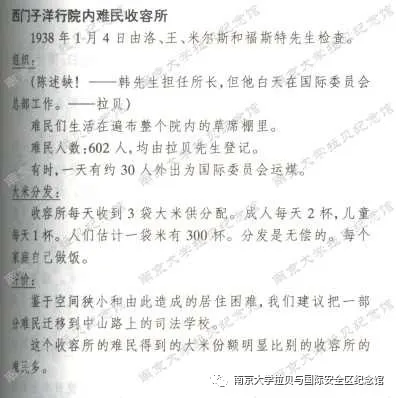
拉贝日记记载:拉贝住宅(西门子难民收容所)当时有602位难民
The Diaries of John Rabe recorded: Rabe’s house (the Refuge at Siemens) harboring 602 refugees
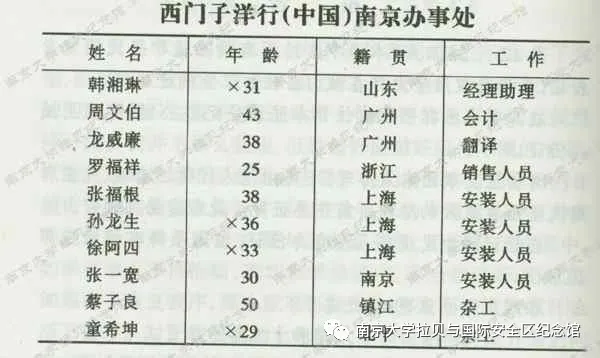
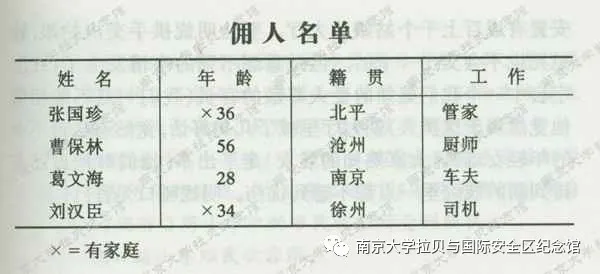
飞行员王光汉、龙应钦和周清锋化名在拉贝的员工名单中
Pilot Wang Guanghan, KMT officers including Long and Major Colonel Zhou disguised as Rabe’s employees
日军在600多个难民中一一检查是否有当过兵的,在拉贝院中避难的宗有琴卖鱼苗的哥哥,因为头上常年戴草帽或毡帽,额头上有一道明显的帽箍,肩上也有挑担的老茧,日本人把她哥哥当作嫌疑人拉出来盘问,但在拉贝的竭力护卫下,终于平安无事。
The Japanese army examined each of the over 600 refugees at the John Rabe’s House to identify Chinese soldiers. Refugee Zong Youqin’s brother was a fisherman who had callus on the shoulder and an obvious mark on the forehead since he had been wearing straw or felt hats for years. The Japanese therefore singled him out as a suspect of Chinese soldier to interrogate him. It was John Rabe who did his best to defend Zong and eventually saved him from the Japanese.
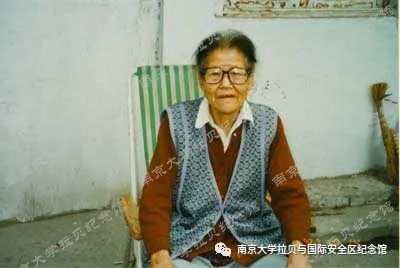
难民宗有琴
Zong Youqin, refugee at the Rabe’s House
拉贝的邻居丁永庆老人也在拉贝院内避难,他回忆说;“拉贝先生对我们难民关怀备至,提供粮食,祛寒的蚕豆等食物使我们得以生存。”
Ding Yongqing, John Rabe’s neighbor who also took refuge at his house yard, recalled John Rabe’s meticulous care, “Mr. Rabe was very kind to us. He provided us with food including broad beans – the special food that defended us from cold winter. Thus we were able to survive.”
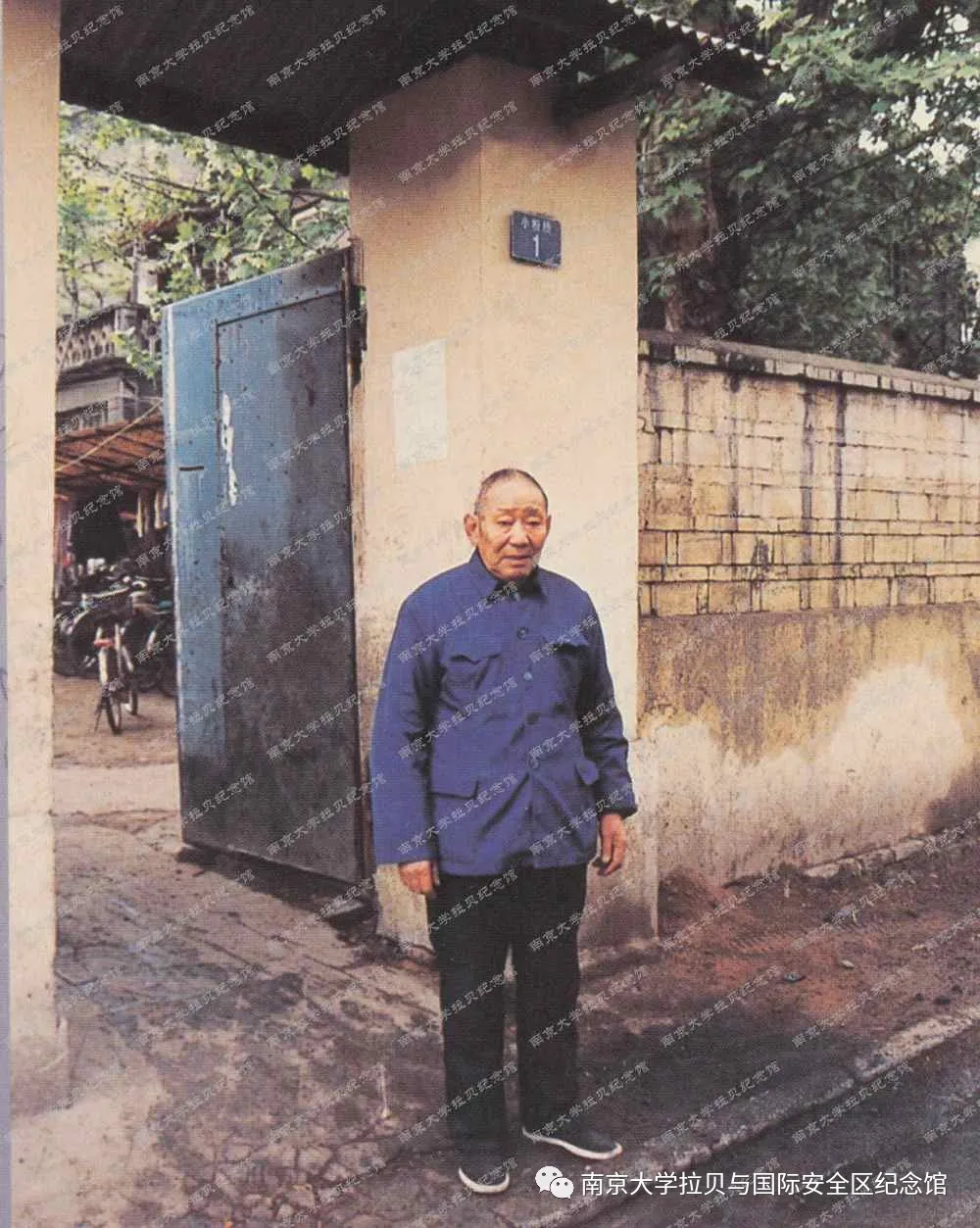
幸存者丁永庆老人
Ding Yongqing, survivor of the Nanjing Massacre
由于拉贝的得力呵护,他院子里的600多名难民,没有一个伤亡。1938年的新年,西门子难民收容所的难民们在院子里排队向拉贝三鞠躬,献给他一块大红绸布,上面写着“您是几十万人的活菩萨。”
Owing to John Rabe’s proper care, there was no death or injury among the 600 or so refugees staying at his yard. On the New Year’s Day of 1938, these people stood in line to bow to John Rabe and presented him a large piece of red silk which read, “You are the living Buddha for more than several hundred thousand Chinese people”.
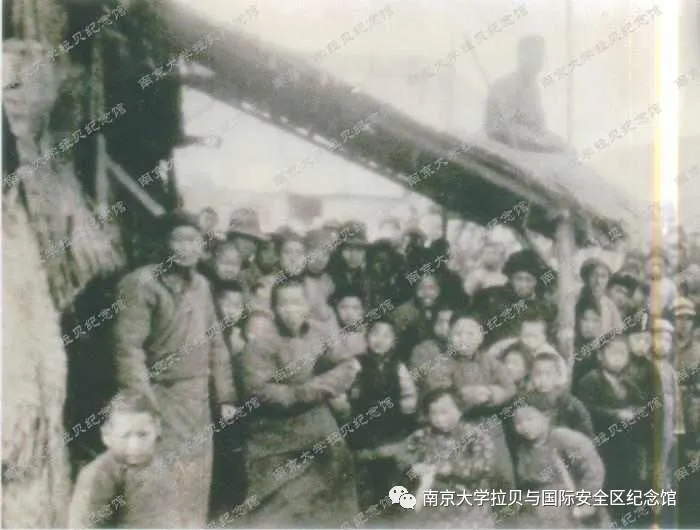
拉贝的院子里保护的600多人无一伤亡
There was no death or injury among the over 600 refugees at Rabe’s courtyard
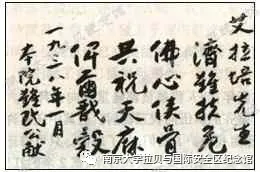
难民致拉贝的新年贺词
The wishes from the refugees to John Rabe
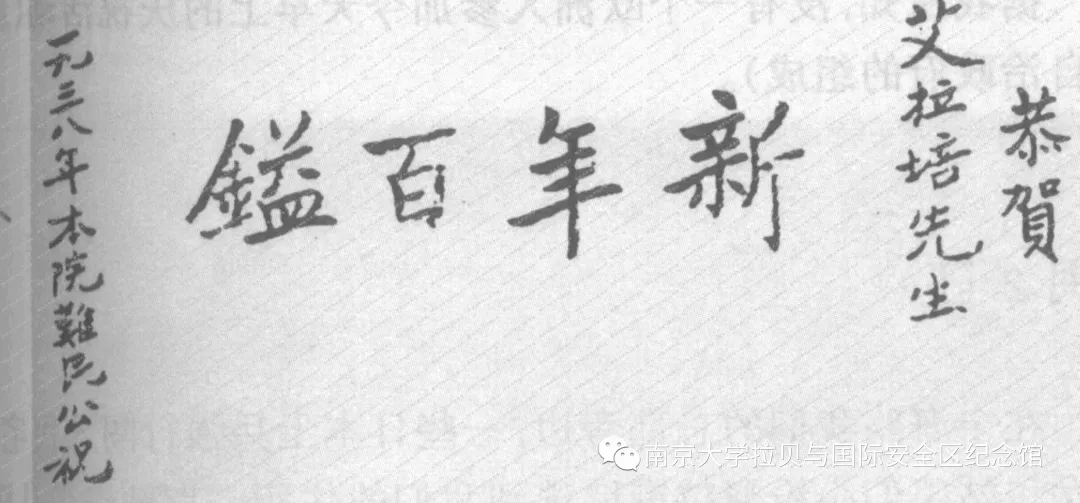
难民致拉贝的新年贺词
The wishes from the refugees to John Rabe
拉贝在他的日记中高兴地记载了当时的情形:“我得到了一份预料不到的再好不过的圣诞礼物,那就是600多个人的性命。”(《拉贝日记》,1937年12月25日)
John Rabe expressed his pleasure in what he had done in his diaries. “The best Christmas present I could have ever expected,” he wrote, “is to have saved the lives of over 600 people.” (from the Diaries of John Rabe, on December 25, 1937)


 感谢所有为网站建设提供影像图片素材的师生校友们